

The casino industry has entered a period of rapid technological transformation, and RFID-enabled gaming tables sit at the center of this shift. Radio Frequency Identification technology, once limited to logistics and retail inventory systems, now powers a new generation of smart tables that track every chip, verify every bet, and generate data streams that operators could only dream of a decade ago. For casino operators, procurement managers, and gaming facility directors, understanding this transformation is not optional — it is a competitive necessity.
The Core Technology Behind RFID Gaming Tables
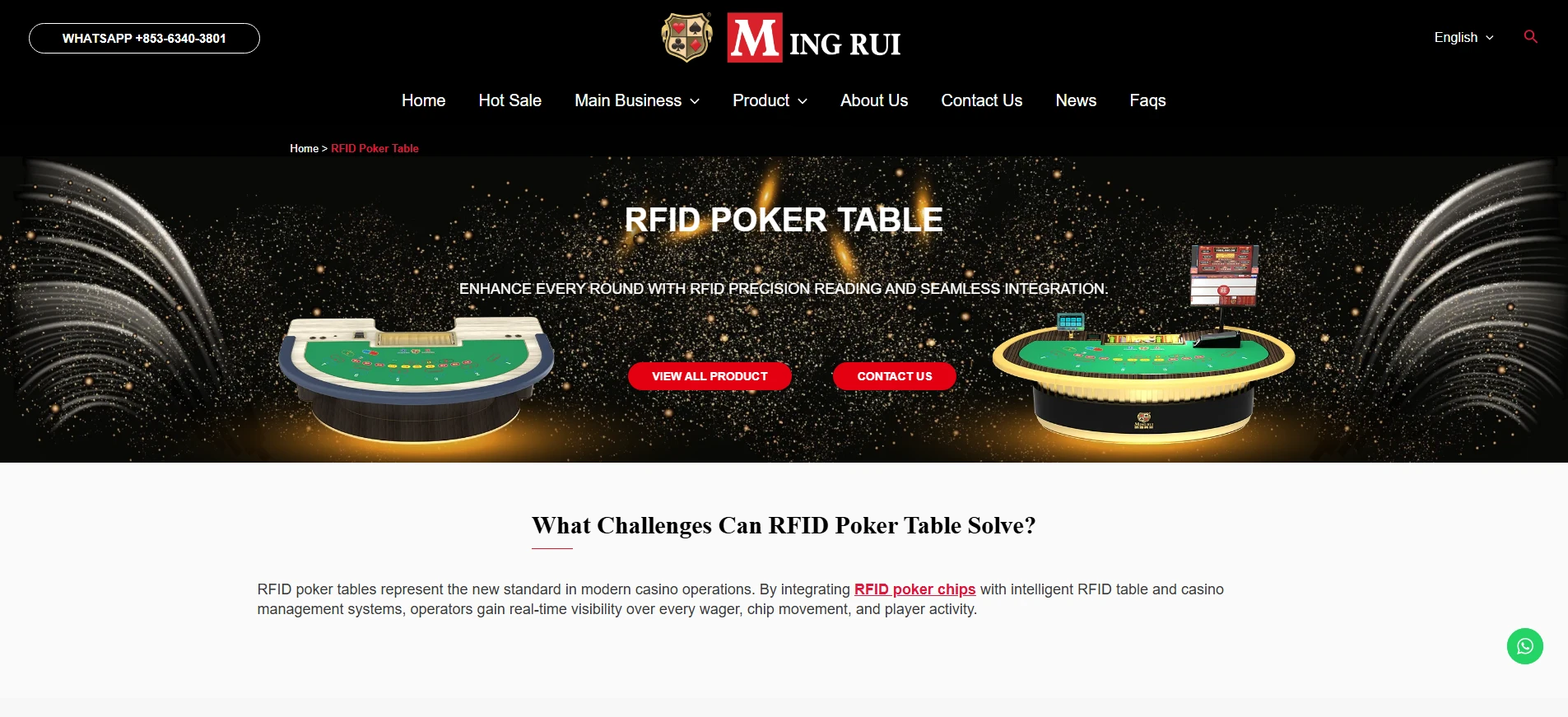
RFID casino gaming tables embed antenna arrays beneath the playing surface, typically integrated into the felt or the table substrate. Each casino chip contains a passive RFID tag — a microchip and antenna coil laminated inside the chip body. When a chip rests on the table, the embedded antennas energize the tag, read its unique identifier, and relay that data to a central processing system.
The architecture involves three layers: the physical layer (antennas, chips, readers), the middleware layer (signal processing, data aggregation, filtering), and the application layer (dashboards, alerts, compliance reporting). Modern systems can read hundreds of chips simultaneously within milliseconds, distinguishing stacked chips and mapping chip positions to specific betting zones on the table.
Operational Benefits That Drive ROI
Casinos deploy RFID tables for measurable returns across multiple operational dimensions. RFID Casino Table Chip inventory management, historically a labor-intensive process requiring manual counts and reconciliation, becomes automated and continuous. A property with 200 gaming tables can reduce chip audit labor by 70 to 80 percent after full RFID deployment, based on data from early adopters in Macau and Las Vegas.
Game protection represents another high-value use case. RFID tables detect wrong payouts, identify chip movement anomalies, and flag suspicious betting patterns in real time. When a dealer overpays a winning bet by even a single chip denomination, the system generates an instant alert. Over a year, these corrected errors can recover millions of dollars in revenue that would otherwise be lost to dealer mistakes or collusion.
Player tracking accuracy improves substantially. Traditional rated play systems rely on floor supervisors manually estimating average bets and session durations. RFID tables capture exact bet sizes, bet frequencies, and session times without human estimation. This data feeds directly into customer relationship management systems, enabling precise comp calculations and targeted marketing campaigns.
Market Adoption Trends
The global RFID casino table market has grown at a compound annual rate exceeding 15 percent since 2018. Macau led early adoption, driven by regulatory requirements for enhanced game monitoring. Las Vegas followed, with major operators retrofitting existing tables and specifying RFID capability in all new table procurements. Emerging markets in Southeast Asia, particularly the Philippines and Vietnam, now mandate RFID systems in new casino developments.
Industry data suggests that over 60 percent of premium gaming tables in Macau now incorporate RFID technology. In Las Vegas, penetration exceeds 40 percent and continues to climb as operators replace aging table inventories. The cost per table has dropped from roughly $25,000 in 2015 to under $10,000 in 2025, making adoption economically viable even for mid-tier properties.
Data-Driven Decision Making
RFID tables produce data volumes that transform decision-making from intuition-based to evidence-based. Every chip placement, every payout, every session duration generates a data point. Aggregated across hundreds of tables and thousands of daily sessions, these data points create a comprehensive picture of table game operations that no manual observation system can match.
Table utilization analytics reveal which tables generate the most revenue per square foot, enabling floor layout optimization. Dealers can be assigned to tables where their skill sets produce the best results — high-accuracy dealers on premium tables, personable dealers on lower-limit tables where customer experience drives loyalty. Shift scheduling can be optimized based on hourly demand patterns revealed by RFID data rather than historical assumptions.
Pricing and limit management also benefit from data-driven insights. RFID data shows the exact relationship between table limits, player behavior, and revenue generation. Operators can adjust limits with confidence, knowing that the impact will be measurable through the same data infrastructure.
Integration with Casino Management Systems
RFID tables do not operate in isolation. They integrate with property management systems, player databases, surveillance networks, and financial reporting platforms through standardized APIs. The data generated by RFID tables — chip positions, bet amounts, game outcomes, session durations — becomes a rich data source that feeds business intelligence tools.
Casino operators who have completed full RFID integration report a 360-degree view of table game operations that was previously impossible. Real-time dashboards show table occupancy, chip velocity, win-loss ratios by table and shift, and player behavior patterns. These insights drive staffing optimization, table mix decisions, and promotional strategy adjustments on a daily rather than monthly basis.
Implementation Challenges and Mitigation
Despite clear benefits, RFID table deployment presents challenges that operators must navigate carefully. The retrofitting process for existing tables requires specialized installation teams and typically takes two to four hours per table, during which the table must be removed from the gaming floor. Operators often schedule installations during low-traffic periods or seasonal closures to minimize revenue impact.
Chip inventory must be replaced or upgraded with RFID-enabled chips, a capital expense that can reach $2 to $5 per chip for premium denominations. A large property holding 500,000 chips faces a significant investment. However, the extended lifespan of RFID chips — typically 5 to 7 years of reliable operation — spreads this cost over a manageable period.

Staff training represents another critical factor. Dealers, floor supervisors, and surveillance operators all need training on new workflows, alert response protocols, and dashboard interpretation. Operators who invest in comprehensive training programs see faster time-to-value and higher staff adoption rates compared to those who treat training as an afterthought.
Regulatory and Compliance Advantages
Gaming regulators worldwide increasingly view RFID technology as a compliance enabler. Automated bet tracking eliminates the need for manual record-keeping in many jurisdictions, reducing regulatory burden and audit preparation costs. In some markets, regulators offer streamlined compliance pathways or reduced audit frequencies for operators using certified RFID systems.
The audit trail generated by RFID tables provides tamper-evident records of every transaction. This capability proves invaluable during regulatory investigations, dispute resolution, and internal audit processes. Operators can produce precise, timestamped records of any hand or session within seconds, replacing hours of manual log review and surveillance footage analysis.
Vendor Landscape and Selection Criteria
The RFID casino table vendor market includes a mix of established gaming technology companies and specialized RFID firms. Key vendors offer differentiated products in antenna design, reader performance, software analytics, and integration capabilities. Operators evaluating vendors should consider several factors beyond price.
Read accuracy under real-world conditions is the single most important performance metric. Vendors should provide test results from live casino deployments, not laboratory conditions. Integration depth with existing casino management systems determines implementation complexity and ongoing maintenance burden. Vendor financial stability and track record in the gaming industry affect long-term support availability.
Service and support capabilities vary significantly among vendors. Operators should evaluate response time commitments, on-site support availability, and remote diagnostic capabilities. A vendor that offers 24/7 remote monitoring and same-day on-site support provides operational security that justifies a price premium.
Future Directions
The next generation of RFID casino tables will incorporate advanced analytics powered by machine learning algorithms. Predictive models trained on historical RFID data will identify advantage play patterns, estimate dealer error rates with greater precision, and optimize table allocation based on predicted demand curves.
Edge computing capabilities embedded in table-side processors will enable real-time analytics without relying on centralized servers, reducing latency and improving system resilience. Macaumr Casino Supplier Some manufacturers are already demonstrating prototype tables with on-board analytics that can detect card counting patterns and unusual chip movement trajectories within seconds of occurrence.
Frequently Asked Questions
What is the typical payback period for RFID casino gaming table investment?
Most operators report payback periods between 18 and 30 months, depending on table volume, existing loss rates from dealer errors, and the intensity of game protection challenges. Properties with high-stakes baccarat rooms often achieve payback in under 18 months due to the significant value of errors prevented and fraud deterred.
Can RFID tables be retrofitted to existing casino tables, or must tables be replaced entirely?
Retrofitting is the most common approach. Specialized installation teams embed antenna arrays into existing table substrates and replace the felt. The process typically takes two to four hours per table. Some operators choose to replace tables entirely when the existing tables are nearing the end of their useful life, which can reduce installation costs.
How does RFID technology handle chip stacking on crowded tables?
Modern RFID readers use anti-collision algorithms that can distinguish individual chips in a stack. The system reads each chip’s unique identifier sequentially within milliseconds. Stacked chips of different denominations are identified and their values summed automatically. Performance can degrade with extremely tall stacks exceeding 20 chips, but this scenario is uncommon in standard casino play.
Are RFID casino chips durable enough for daily gaming floor use?
RFID chips manufactured by leading suppliers undergo rigorous testing for impact resistance, temperature cycling, moisture exposure, and repeated bending. The RFID inlay is embedded within the chip body, protected by the same resin or clay composite that gives the chip its weight and feel. Field data shows failure rates below 0.5 percent over a five-year operational period when chips are handled normally.
What data security measures protect the information collected by RFID tables?
RFID table systems employ multiple security layers. Chip-to-reader communication uses encrypted protocols to prevent eavesdropping or cloning. Data transmission between table-side readers and central servers occurs over encrypted network channels. Access to analytics dashboards is controlled through role-based authentication. Reputable vendors comply with gaming industry security standards and undergo regular third-party penetration testing.